
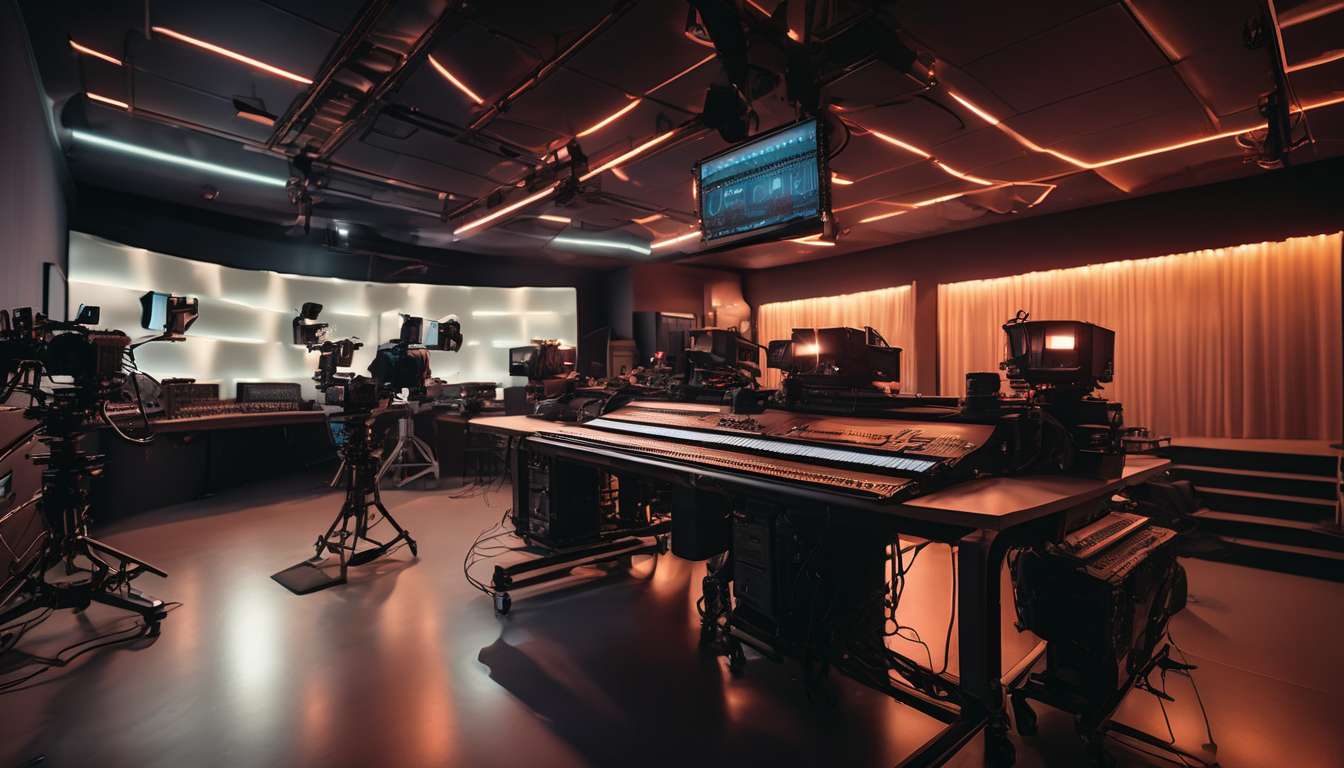
But what happens when mainstream technology vendors decide to upgrade the systems that power adult movie studios?
We find ourselves at the intersection of ethics, commerce, and innovation. Improved streaming infrastructure, AI-driven editing tools, and enhanced cybersecurity can reshape an industry often excluded from tech planning. These upgrades raise practical and normative questions about who benefits and who is harmed.
Key practical questions practitioners and observers grapple with:
-
Will higher-quality delivery and automated workflows empower creators or concentrate power among a few platforms?
- Improved streaming can reduce barriers for independent producers.
- Automated editing and distribution may also be bundled by large platforms, centralizing control and revenue.
-
Will privacy protections keep pace with advanced analytics, or will performers face new vulnerabilities?
- Enhanced analytics can improve recommendations and monetization.
- The same capabilities can increase risks of de-anonymization, unauthorized distribution, and surveillance.
We also consider broader ripple effects:
- Payment systems normalizing transactions can increase financial inclusion for creators but may also bring platforms under stricter banking and regulatory scrutiny.
- Content moderation policies will evolve as detection tools and generative techniques advance, affecting what material remains accessible and who enforces those boundaries.
- Legal frameworks will need to adapt to new capabilities (deepfakes, automated distribution, cross-border hosting), creating uncertainty for studios and performers.
Throughout this piece, our aim is to unpack tensions, present evidence from vendors and studios, and highlight implications for creators, consumers, and policymakers.
Our goal is not to moralize but to clarify how technical upgrades translate into real-world outcomes.
Market Forces and Incentives
We’re driven by market forces and incentives that shape every production decision. This includes casting, content style, distribution channels, and pricing.
We balance creative ambition with community expectations. Belonging comes from responsible choices that respect audience needs and social norms.
We prioritize content moderation.
- We keep our platforms respectful and compliant.
- We invest in policies that protect creators and viewers alike.
We insist on performer safety as non‑negotiable.
- This commitment guides casting, contracts, and on‑set procedures.
- The goal is for everyone to feel supported and valued.
We coordinate with partners on streaming infrastructure.
- Ensure reliable delivery without compromising privacy or access.
We measure success by sustainable outcomes, not short‑term clicks.
- Sustainable revenue
- Fair compensation
- Audience trust
- We adapt when incentives misalign with these goals.
We create regular feedback loops with stakeholders.
- Consult performers, technicians, and platform operators.
- Use feedback to recalibrate incentives toward transparency and inclusion.
We will keep refining governance and metrics. The aim is industry growth that honors people, community standards, and shared prosperity.
Streaming Infrastructure Upgrades
We will upgrade our streaming infrastructure to improve reliability, reduce latency, and protect user privacy across all delivery points.
Priorities:
- Resilient CDN architectures with multi-region distribution.
- Redundancy at every layer (ingest, origin, cache, playback).
- End-to-end encryption to protect content and user data.
Goal: users can trust every session.
We will implement low-latency protocols and adaptive bitrate algorithms to keep streams smooth on mobile and desktop.
Approach:
- Deploy low-latency transport protocols (e.g., WebRTC, low-latency HLS/DASH).
- Implement adaptive bitrate (ABR) logic tuned to network conditions and device capabilities.
- Optimize player buffering and startup paths for fast join times.
We will integrate robust content moderation tooling into the delivery pipeline to ensure fast takedowns and consistent policy enforcement without disrupting legitimate creators.
Components:
- Automated detection and human review escalation.
- Fast takedown hooks into CDN/edge caches.
- Audit logs and policy versioning for consistency.
This ties directly to performer safety: faster verification workflows, secure identity checks, and controlled access reduce risk while keeping creators connected to their audiences.
Safety measures:
- Streamlined verification and re-verification flows.
- Secure identity checks with privacy-preserving storage.
- Role-based access controls and temporary access tokens.
We will monitor telemetry collaboratively, sharing incident postmortems and improvement plans so everyone feels included in system health.
Practices:
- Unified telemetry across services with dashboards and alerting.
- Regular incident reviews and public postmortems.
- Roadmaps for remediation and measurable improvement targets.
We will set clear SLAs, use proactive scaling, and perform staged rollouts to avoid surprises.
Operational controls:
- Defined SLAs for availability, latency, and recovery.
- Autoscaling and capacity planning based on traffic patterns.
- Canary and phased rollouts with rollback plans.
By combining technical rigor with transparent governance, we will make streaming infrastructure both dependable and welcoming — a place where creators and viewers feel they belong and are protected.
AI Tools for Production
We will adopt AI-assisted production tools to speed editing, automate routine tasks, and help creators produce higher-quality work while preserving artistic control.
We’re building workflows where generative trimming, color grading, and audio cleanup reduce repetitive labor so teams can focus on storytelling and creative nuance.
These tools integrate with content moderation pipelines to flag problematic clips early, keeping releases compliant and reducing downstream rework.
We’ll standardize templates and shared models so editors, performers, and producers feel included in a consistent process, encouraging collaboration and mutual respect.
By connecting AI tools to our streaming infrastructure, we’ll export optimized encodes and metadata that improve discoverability and playback performance across platforms.
We’ll provide clear controls so creators can accept, tweak, or reject AI suggestions—maintaining artistic authority while boosting throughput.
We prioritize interoperable systems that respect consent and support secure workflows.
- Goals:
- Make production faster.
- Make workflows safer in practice.
- Make the process more communal without sacrificing quality or creator autonomy.
Privacy and Performer Safety
We’ll enforce strict privacy controls and consent processes so performers retain control over how their images, data, and work are stored, shared, and monetized.
We’ll build clear, shared standards that treat everyone as part of a trusted community:
- Consistent consent records that are machine-readable and human-readable.
- Role-based access to limit who can view, edit, or distribute content.
- Encrypted storage for sensitive files and metadata.
- Revertible permissions that honor changing wishes and allow rollbacks.
We’ll integrate content moderation that’s transparent and participatory, letting performers flag issues and see resolution timelines rather than opaque removals.
We’ll prioritize performer safety by combining technical safeguards with human-led review, rapid takedown workflows, and trauma-informed reporting paths so people feel supported and believed.
We’ll design streaming infrastructure that minimizes leak vectors, limits distributed copies, and logs access for accountability while keeping latency low and viewing fluid.
We’ll share tools and training across studios so smaller creators aren’t left behind, and we’ll adopt open standards so performers can move their records between platforms without losing control.
We’ll keep this collaborative, safety-first approach central as technology upgrades studio systems.
Payment and Financial Access
We will ensure equitable, flexible payment systems that let performers receive earnings quickly, securely, and on terms that respect their privacy and financial needs.
We will design payout options that accommodate multiple rails, including:
- Bank transfers.
- Stablecoin or crypto rails where legal.
- Prepaid or custodial accounts for those who prefer limited exposure.
We will prioritize low fees, predictable schedules, and clear statements so every team member feels valued and informed.
We will integrate payment flows with streaming infrastructure to tie earnings to view metrics without exposing sensitive data.
We will build controls that let performers choose how much audience-facing information appears on payouts.
We will work with banks and processors who understand content moderation and performer safety needs, reducing disruptive account freezes by proving compliant, verifiable workflows.
We will offer onboarding assistance, multilingual support, and emergency access protocols for those facing sudden financial challenges.
By centering trust, transparency, and practical flexibility, we will create financial systems that reinforce belonging and give performers control over their income and privacy.
Moderation and Content Policy
We will establish clear, consistent policies and human-plus-automated moderation processes that protect performers’ rights, ensure legal compliance, and keep platform standards transparent and predictable.
We will create a shared framework so every contributor feels respected and accountable, and we will document rules in plain language so teams and creators know what’s expected.
Our content moderation will blend smart automation for scale with trained human reviewers for nuance, reducing false positives and supporting contextual decisions that honor performer safety.
We will integrate moderation tools directly into streaming infrastructure to catch problematic uploads early, flag age and consent concerns, and route complex cases to specialists.
We will set escalation paths, audit logs, and appeal procedures that keep creators and staff aligned and supported.
We will invest in ongoing training and community feedback loops so policies evolve with the industry.
By centering clarity, fairness, and performer safety, we will build systems people can rely on and spaces where creators and audiences belong.
Legal and Regulatory Risks
Identify and manage legal and regulatory risks proactively.
We must minimize exposure to liability, fines, and platform restrictions by aligning contracts, consent records, and age verification with applicable jurisdictional laws.
Ensure content moderation is auditable and consistently applied so decisions are defensible to platforms and regulators.
Commit to performer safety with thorough documentation.
Keep clear, accessible records of medical checks, consent forms, and on‑set incident reports so regulators and platforms can verify that wellbeing is prioritized.
Audit streaming and platform infrastructure for compliance.
Review data protection, takedown responsiveness, and intermediary liability rules and use retained logs to demonstrate good‑faith efforts during disputes.
Train staff and creators to reduce enforcement risk.
- Provide training on recordkeeping and legal red flags.
- Explain how content moderation decisions are made to reduce inconsistent choices that attract enforcement.
Maintain external relationships to adapt quickly.
- Keep ongoing relationships with legal counsel and industry peers to respond to new regulations and share best practices.
- Coordinate with peers to protect collective interests while ensuring creators feel supported and included.
Power Dynamics and Future Paths
Thesis: power imbalances shape industry norms and require pathways to rebalance authority and opportunity.
We observe concentrated control when platforms dictate content moderation rules and streaming infrastructure standards, often leaving performers and smaller creators with limited recourse.
To belong and thrive, we need governance models that include creator representation, transparent takedown procedures, and shared technical standards that prioritize performer safety.
Proposal: collaborative councils to co-design policy.
- Establish councils composed of studios, performers, vendors, and regulators.
- Ensure policies reflect community values and incorporate due process for moderation decisions.
- Create clear, publicly documented procedures for appeals and dispute resolution.
Proposal: interoperable streaming infrastructure and equitable economics.
- Develop shared technical standards that lower barriers to entry for smaller creators.
- Implement revenue-sharing mechanisms that distribute income more equitably across participants.
- Encourage technical openness to reduce vendor lock-in and foster competition.
Proposal: vendor certification and safety protocols.
- Support certification programs for vendors that commit to privacy, consent verification, and emergency response.
- Require verifiable safeguards for performer safety as part of marketplace access.
- Promote auditability and transparency of vendor practices to build trust.
Implementation principle: align incentives to rebalance authority without sacrificing compliance.
- Design economic incentives (revenue-sharing, grants, fee structures) that reward safety and fair practices.
- Mandate transparent appeals and audit trails for moderation and takedown actions.
- Adopt open technical standards to enable interoperability and reduce centralized control.
Outcome: inclusive, safer, and more equitable industry systems.
By giving all stakeholders a voice, managing risks proactively, and expanding access through technical and economic reforms, we can build systems where authority is balanced and opportunities grow across the industry.
How will upgrades to studio systems affect the day-to-day workflow of non-technical performers and crew members?
Upgrades will simplify daily workflows for non-technical performers and crew.
We’ll see simpler interfaces, clearer schedules, and fewer manual tasks, which means the team will be able to focus more on creativity and collaboration rather than troubleshooting or repeated administrative steps.
Training and on-set support will be short and practical.
- Brief, hands-on trainings before or at the start of production.
- On-set support staff to handle questions and minor issues quickly.
- Intuitive tools designed to minimize the learning curve.
Tools will reduce friction and speed routine tasks.
- Automated or semi-automated checklists and call sheets.
- Clear, visual scheduling and task reminders.
- Pulling routine technical steps out of crew responsibilities so they can concentrate on performance.
Standardized workflows and improved communication will increase inclusion and reliability.
- Consistent processes across departments reduce surprises.
- Better communication channels keep everyone informed in real time.
- Small technical issues get handled by dedicated teams, keeping shoots running smoothly and minimizing disruptions.
What environmental and energy-consumption impacts are associated with the new infrastructure and AI tools deployed by adult studios?
We’re asking how the new infrastructure and AI tools change energy use and environmental impact.
Increased electricity demand: AI infrastructure raises power consumption from several sources:
- Servers and GPUs: large-scale model training and inference require substantial compute.
- Cooling systems: datacenter cooling significantly adds to total energy use.
- Edge devices: proliferation of smart devices increases distributed electricity draw.
Greater e-waste: Frequent hardware refresh cycles produce more electronic waste, driven by:
- Shorter upgrade timelines for high-performance accelerators.
- Disposal challenges for specialized components.
Carbon footprints from compute and data transfer: The environmental impact depends on:
- The energy mix powering datacenters and networks.
- Inefficiencies in long-distance data transfer and poorly optimized workloads.
Opportunities to reduce harm: We can lower impacts by choosing and implementing better practices:
- Use energy-efficient hardware and optimize software for lower compute needs.
- Power operations with renewable energy and pursue carbon-aware scheduling.
- Adopt responsible disposal and recycling for retired equipment and design for reuse.
Collective action through standards and transparency: To scale positive change we should:
- Advocate for shared efficiency and reporting standards for compute, energy, and emissions.
- Require transparency from providers on energy sources, PUE (power usage effectiveness), and lifecycle emissions.
- Coordinate policies and best practices so organizations can act together and be held accountable.
How are intellectual property rights and content ownership managed when AI is used to generate or alter performances?
We’re asking how IP and ownership work when AI generates or alters performances.
Performers, creators, and studios should have clear contracts assigning copyrights, licenses, and moral rights.
Ensure consent, revenue-sharing, and attribution clauses for AI-derived content.
Set policies for deepfakes, revocation, and data provenance.
Prefer transparent registries and dispute-resolution mechanisms so everyone feels respected and included.
Conclusion
You’ve seen how market forces push studios to modernize streaming, AI, payments and moderation.
These technological shifts reshape performer safety, privacy and legal risks.
As vendors upgrade systems, you’ll face trade-offs between efficiency, revenue and responsibility.
- Improved access can increase reach and earnings.
- New vulnerabilities can expose performers and users to harm.
- Power imbalances can concentrate control with platforms and vendors.
Going forward, you’ll need clearer policies, stronger safeguards and collaborative regulation.
- Clearer policies that define acceptable use, data handling and liability.
- Stronger safeguards such as robust privacy controls, provenance for media, and incident response plans.
- Collaborative regulation developed with creators, platforms, vendors and regulators to balance innovation with protection.
The goal: ensure technology benefits creators and consumers without amplifying harm or concentrating control.